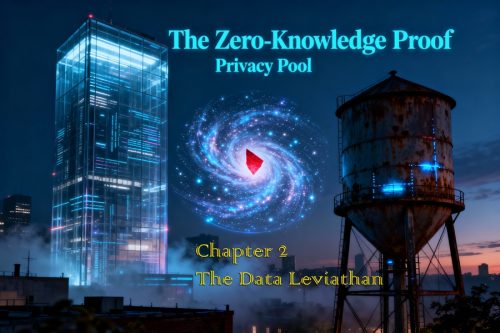
Sunlight, sharp and unfiltered, streamed through the crystalline walls of the Panopticon Bureau. It wasn’t just a building; it was a statement. A thirty-story diamond of transparent polymer and reinforced glass, it stood at the heart of the city, a beacon of unwavering scrutiny. From within, every employee had a 180-degree view of the metropolis they monitored. The message was clear: We have nothing to hide. Do you?
Lena Kovac sat at her station on the 15th-floor Audit Division, feeling the familiar, righteous hum of the place in her bones. Her workspace was a sleek crescent of interface glass. Above it, holographic data-streams flowed in elegant, luminous rivers—financial transactions, public utility usage, communications metadata (content legally protected, but patterns fair game). It was the city’s vital signs, pulsing in light.
She tapped a cluster of anomalous energy readings in the Green Sector. With a few gestures, she isolated the source: an illegal cryptocurrency mine operating out of a decommissioned public laundry. She filed the report, tagged it for the Enforcement Division, and a warm flush of satisfaction spread through her. A minor victory, but a clean one. The system worked.
“Kovac. My office.”
The voice was clipped, authoritative. Inspector Aris Maro stood at the threshold of his glass-walled enclosure, his silhouette sharp against the skyline. He was a man carved from granite and regulation, his close-cropped hair grey at the temples, his eyes the color of old data chips.
Lena stood, smoothing the front of her standard-issue grey tunic. She entered the office, and the door hissed shut, muting the ambient hum of the bullpen to a soft whisper.
“Sir.”
Maro didn’t sit. He gestured, and a complex, three-dimensional network graph exploded into life between them. It was a beautiful, terrifying thing. Lines of light connected thousands of nodes—bank accounts, shell corporations, anonymous digital wallets.
“The Veridian Gap refugee camp,” Maro began, his voice low. “Six million Resource Credits, allocated for shelter foam, water purifiers, and neonatal meds. Diverted. Siphoned off through a daisy-chain of fake contractors and vanished.”
Lena’s stomach tightened. She’d seen the news briefs about the camp’s deteriorating conditions. “How?”
“Old-fashioned greed, with new-fashioned tools.” Maro zoomed in on a section of the graph. The lines of the fraud scheme converged on a single, dense knot—a mixer. But unlike the clunky, traceable blenders of the past decade, this knot was a perfect, impenetrable sphere of light. “They used a privacy pool. A sophisticated one. It employs zero-knowledge proofs.”
Lena leaned forward, her auditor’s mind intrigued despite the horror of the crime. “zk-SNARKs? I’ve read the theory. They allow you to validate data without seeing it.”
“They allow you to hide,” Maro corrected, a note of disdain in his voice. “This pool is a black box. We know the stolen credits went in. We know clean credits came out the other side, ready to be spent. But the pathway, the origin, the destination? Obliterated. It’s a digital singularity.”
He pointed to the sphere’s signature—a string of code hovering beside it. “All we have is this. A cryptographic fingerprint. Our forensics team calls it the ‘Silent Bell.’ It rings, but gives no sound, reveals no location.”
“Then how do we—?”
“You follow the silence, Kovac.” Maro’s eyes pinned her. “You’re my best pattern-recognition analyst. And you have a clean record. This case is a hydra—cut off one head of the fraud, two more grow. I need someone who sees the shape of the emptiness.” He transferred the case file to her interface with a flick of his wrist. “Find the Silent Bell. Find the operator. The credits are likely gone, but if we can expose the mechanism, we can prevent the next theft. Millions may depend on clean water, but the system depends on accountability. Dismantle the bell.”
The weight of the assignment settled on Lena’s shoulders, heavy and exhilarating. “Yes, sir.”
Back at her station, Lena dove into the graph. For hours, she lived inside the data. She analyzed everything around the Silent Bell. Timing of transactions. The infinitesimal latency delays as data entered the pool. The energy cost of running such a complex cryptographic operation.
Her mind was a scalpel, dissecting the void.
A memory surfaced, unbidden, as she worked. Not a painful one, like Zed’s, but a foundational one. She was nine, sitting on her father’s lap in their old, warm apartment. Her father, a gentle man who worked in water reclamation, had a face on the news screen—a regional director, caught diverting clean water to private greenhouses for kickbacks. Her father had testified. He’d shown the data, the logs, the hidden pipes. He’d been afraid, his hand shaking on the datapad, but he’d done it. The director was removed. The water flowed to the public districts again.
“Sunlight, my little lens,” her father had said afterwards, hugging her tight. “It’s the best disinfectant. Even when it’s scary, even when it’s hard, you let the light in. That’s how you protect people.”
The memory was her compass. Transparency wasn’t oppression; it was a shield for the vulnerable. The fraudster stealing refugee aid was hiding in shadow. Her job was to turn on the light.
Her breakthrough came not from the data stream itself, but from the city’s infrastructure grid. The Silent Bell process was computationally monstrous. It would generate heat. It would draw a specific, fluctuating power load. It wouldn’t be in a gleaming server farm—those were too easily audited. It would be somewhere old, with independent infrastructure.
She cross-referenced anomalous, spikey power draws from decommissioned municipal structures against historical broadband nodes that could handle the data throughput. The Green Sector, with its skeletal remains of the old hydrology network, lit up.
One location, a decommissioned water tower, ticked every box: isolated, structurally sound, with a direct, hardened fiber-optic line laid decades ago for now-defunct flood sensors. Its power usage was irregular, masked as minor drainage pump activity, but the pattern… the pattern matched the latency spikes of the Silent Bell’s operation.
She had it.
A strange cocktail of emotions fizzed in her chest—triumph, trepidation, a fierce sense of purpose. She gathered her findings into a tight report, along with a request for a field inspection warrant. She sent it to Maro.
His reply was almost instantaneous: “Authorized. Proceed with caution. Suspect may be ideologically motivated and technologically formidable. Remember, you are the law.”
Lena collected her gear: a standard-issue forensic scanner, a jurisdiction key to override basic locks, and a palm-sized transparency drone—a tiny, spherical device that could map interiors and broadcast live footage back to the Bureau.
The ride to the Green Sector was a journey from glass to grit. The shining towers of the city center gave way to lower, older blocks of carbon-stained concrete and composite. The air grew heavier, smelling of damp earth and growing things from the vertical farms, undercut with the tang of old metal.
She found the water tower at the end of a weed-choked service road. It was a rusted giant, standing on skeletal legs, a relic of a pre-climate-chaos world. It looked abandoned, dead. But her scanner, pointed at the base, picked up the faint, steady hum of high-end cooling systems and the distinctive electromagnetic whisper of raw data processing.
Her heart hammered against her ribs. This was it. The lair of the Silent Bell. The workshop of a thief, or at least, an enabler of thieves.
She looked up the sheer, rust-streaked flank of the tower. There was a service ladder, its lower rungs missing. Someone who came here didn’t want visitors.
Inspector Maro’s words echoed. You are the law.
Lena took a deep breath, slung her scanner over her shoulder, and found her first handhold on the corroded metal. The climb was long, and the world below slowly spread out beneath her—a patchwork of the hidden, the forgotten, and the deliberately obscured. With every rung, she climbed not just toward a suspect, but toward the confrontation at the heart of her world: the relentless, necessary light, ascending to meet the perfect, engineered dark.
Table of contents:
Introduction
Chapter 1: The Privacy Pool
Chapter 2: The Data Leviathan
Chapter 3: zk-SNARKs and Suspicions <<<<<< NEXT
Chapter 4: The Anonymity Set
Chapter 5: A Trace of Blood
Chapter 6: To Reveal or to Shield?
Chapter 7: The Ultimate Audit
Chapter 8: Trustless, But Not Heartless
Chapter 9: Proof of Personhood
Chapter 10: Verified, Not Exposed
