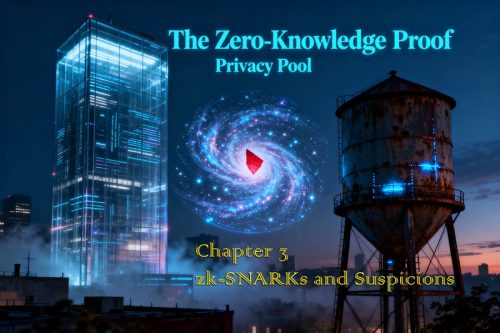
The hatch at the top of the ladder wasn’t just locked; it was seamless, a perfect disk of aged steel that blended with the tower’s hull. Lena ran her fingers along its edge. No visible hinges, no keyhole. Just the faint, almost imperceptible vibration of machinery on the other side.
Her transparency drone, a silver sphere the size of a grapefruit, hummed beside her head. “Scan,” she whispered. The drone projected a thin blue laser grid over the hatch. The readout on her wrist interface flickered: COMPOSITE ALLOY. INTERNAL ELECTRO-MAGNETIC SEAL. NO STANDARD ACCESS PROTOCOL.
Technologically formidable, Maro had said. Understatement.
Lena wasn’t a field enforcer, but she was a problem-solver. She accessed the city’s public utility schematics for the structure. The water tower was decommissioned, but its original rainwater filtration system had included an emergency manual release—a maintenance feature, in case of power failure. According to the century-old blueprint, it should be a lever on the exterior, near the base of the tank itself.
She leaned precariously over the rusted gantry, scanning the curved steel. There, half-hidden under a crust of lichen and old paint: a sealed, corroded panel. Using the multi-tool from her belt, she pried it open. Inside was a red lever, stiff with decades of disuse. She braced herself and threw her weight against it.
For a long moment, nothing. Then, with a shriek of protesting metal that echoed inside the hollow tower, the lever gave. A deep, mechanical clunk resonated through the structure.
Above her, the seamless hatch hissed. A circumferential line appeared, and the disk retracted sideways into the wall, revealing a dim, blue-lit interior and a rush of chilled, dry air.
Lena climbed into the belly of the beast.
The space was a cathedral to data. The curved walls were lined with sleek, humming server racks, their status LEDs painting the air in pulsing constellations of green and amber. Thick bundles of fiber-optic cable snaked across the floor like roots of light. In the center, surrounded by a crescent of holoscreens displaying cascading waterfalls of code, sat a boy.
He was younger than she’d imagined. Maybe her age, maybe a year older. Pale, with intense, dark eyes that were already fixed on her, wide with a mixture of shock, fear, and defiance. He wore a simple black thermal shirt, his fingers hovering over a keyboard, frozen.
“Don’t move,” Lena said, her voice steady, echoing in the chamber. Her drone floated forward, its lens whirring as it captured everything. “I am Lena Kovac, Auditor First Class with the Panopticon Bureau. This structure is operating in violation of City Code 45.7, Unlicensed High-Bandwidth Infrastructure, and is a material node in an active fraud investigation. You will cease all operations and submit to interrogation.”
The boy—Zed—didn’t raise his hands. His shock was hardening into a sharp, calculated calm. His eyes darted from her face to the drone to the open hatch behind her. “You triggered the manual release,” he said, his voice surprisingly level. “The 1912 flood fail-safe. Clever.”
“Your ‘Silent Bell’ isn’t as silent as you think,” Lena replied, stepping further in, her scanner now active and pinging as it mapped the server stacks. “You’re moving stolen Resource Credits. Millions meant for the Veridian Gap camp.”
A flicker of genuine confusion crossed his face, then was replaced by cold understanding. “The Benefactor,” he breathed. He didn’t deny it. He turned to one of his screens, his fingers flying. “You’re wrong. The transaction was clean.”
“Prove it.”
He stopped typing and looked at her, a challenge in his gaze. “That’s the point. I can. But you won’t like how.” He gestured to a vacant stool near his console. “Sit. Or don’t. But if you want to understand, you’ll watch.”
Every protocol screamed at Lena to subdue him, to seize the equipment. But Maro wanted the mechanism exposed. And something in Zed’s certainty gave her pause. She remained standing but gave a curt nod. “Demonstrate.”
“The tool is called a zero-knowledge proof,” Zed began, his voice taking on a lecturer’s cadence. “Specifically, a zk-SNARK. It doesn’t reveal data. It proves properties about the data.” He pulled up a simple interactive simulation on a secondary screen. It showed two cartoon figures and a large, ornate chest with multiple locks.
“You have a secret. In this case, the source of the credits. It’s in the chest. I am the prover. You are the verifier. You want to know if my secret passes a specific rule: ‘Is this credit listing on the Stolen Asset Ledger?’”
Lena watched, arms crossed. “Go on.”
“If I just opened the chest to show you, you’d see everything inside. That’s a full data dump. That’s what your Bureau wants. Total exposure.” His voice was brittle. “But a ZKP is different. You, the verifier, can ask me to perform a series of unique, random challenges on the locked chest.”
On the screen, the verifier figure said, “Shake the chest near your left ear.” The prover complied. A soft click was heard.
“Now, tilt it backwards and tap the base three times.” Another, different click.
“Each challenge,” Zed explained, “is based on the secret inside. If the secret were different—if the credits were stolen—the chest would sound different. It would fail the challenge. But if I pass enough unique, random challenges, the probability that I’m cheating becomes astronomically small. You become statistically certain the secret is valid, without ever seeing the secret.”
The simulation concluded. The verifier figure displayed a green checkmark. “STATEMENT VERIFIED: CREDIT SOURCE IS CLEAN.” The chest remained locked.
“That’s what my Privacy Pool does,” Zed said, turning back to her. “I ran that proof. The Benefactor’s credits passed. They are not on the stolen ledger. Therefore, by the only objective metric my system can check, they are clean.”
Lena stared at the green checkmark, her mind racing. The elegance was infuriating. The logic was airtight, and yet it felt like a magician’s trick. “You proved they weren’t stolen,” she countered, her voice sharp. “You didn’t prove they were legitimate. What if they were obtained by fraud? By deception? What if the ledger itself is wrong? Your proof is blind to context.”
Zed’s composure cracked slightly. “My system checks against the public record! It’s not my job to be judge, jury, and psychic! I provide a service—privacy with accountability. The accountability is the proof!”
“The accountability is a fig leaf!” Lena shot back, stepping closer. “You’ve built a perfect black box, Zed. You’re so proud that it can answer one narrow question, you’re blind to the million other questions it ignores. Someone is starving because of the data you’re ‘protecting’.”
His face paled, but his eyes burned. “And someone else is safe because of it. You see one crime you can’t solve and you want to break the vault that protects thousands of innocent people. Your ‘sunlight’ burns just as much as it disinfects.”
The phrase, so close to her father’s, hit her like a physical blow. How could he twist something so pure? “Innocent people don’t need this level of secrecy.”
“You truly believe that?” he asked, and the sadness in his voice was genuine. “You live in a glass tower and think everyone has curtains they can simply open.”
Their standoff was a chasm of ideology, humming in the space between the servers.
A sharp, priority ping erupted from Lena’s wrist interface. Inspector Maro’s ID flashed. She accepted, and his holographic head, grim and intense, appeared above her arm.
“Kovac. Status.”
“I’ve made contact with the suspect and secured the location, sir. He’s demonstrating his technology now.”
“Forget the tutorial,” Maro snapped. “Forensics just isolated a tangible forensic link. The servers used to initiate the original fraud were physically breached. The perp cut themselves. They found a micron of data-protein residue—a unique bio-signature. It’s a ‘blood trace.’ We’ve encoded its signature.”
A file arrived on Lena’s interface. It was a string of complex alphanumerics—the digital DNA of a person.
“Your suspect’s pool is the only viable wash for the stolen credits,” Maro continued, his eyes boring into the space where Zed stood. “Run that trace against his system. If there’s a match, we have our criminal. That’s a direct order, Auditor.”
The hologram winked out.
The air in the water tower became ice. Lena looked from the forensic signature on her screen to Zed, who had heard every word. His earlier defiance was gone, replaced by a look of profound, visceral horror.
He wasn’t looking at her like a cornered criminal. He was looking at her like a doctor watching someone prepare to burn down a hospital to kill a single germ.
“A blood trace,” he whispered, the words barely audible over the server hum.
Lena took a breath, her finger hovering over the command to transmit the trace to his console. The law was clear. The order was given.
“Well?” she said, her voice hardening to conceal her own sudden, dreadful doubt. “Let’s see what your perfect proofs have been hiding.”
Table of contents:
Introduction
Chapter 1: The Privacy Pool
Chapter 2: The Data Leviathan
Chapter 3: zk-SNARKs and Suspicions
Chapter 4: The Anonymity Set <<<<<< NEXT
Chapter 5: A Trace of Blood
Chapter 6: To Reveal or to Shield?
Chapter 7: The Ultimate Audit
Chapter 8: Trustless, But Not Heartless
Chapter 9: Proof of Personhood
Chapter 10: Verified, Not Exposed
