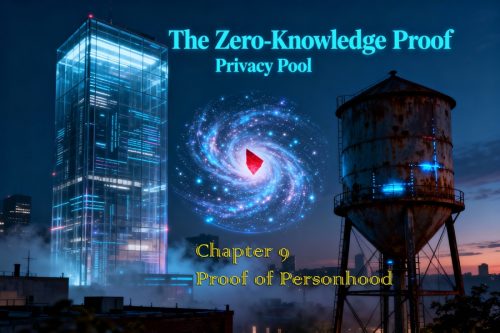
The Council Chamber of the Municipal Spire was a far cry from the humming, intimate darkness of the water tower. Here, everything was soaring lines, polished synth-wood, and light. A vast, circular room with tiers of seating looked down upon a central speaking floor, where Zed and Lena now stood, feeling microscopic and exposed. Above them, a transparent dome revealed the bruised purple and orange of the evening sky. It felt less like a room and more like the inside of a gigantic, judgmental eye.
They were not on trial. Not officially. Inspector Maro had made sure of that, his fury tempered by the undeniable, clean success of the “Ultimate Audit.” Instead, they were present at a “Special Oversight Hearing on Digital Privacy and Accountability Frameworks.” They were exhibits A and B in a debate that was tearing the city apart.
In the weeks since Elara Vance’s arrest, the city had convulsed. Privacy purists staged “Blackout” protests, wearing data-scrambling fog-suits and chanting outside the Panopticon. Transparency absolutists held “Sunlight Marchs,” demanding an end to all unbreakable encryption. News channels were locked in a war of pundits and hyperbole. And in the center of the storm was the “SIPAS Protocol,” the “Judge Algorithm”—the elegant, terrifying, genius piece of code that had started it all.
Zed, in a borrowed, uncomfortable suit, kept his eyes on the podium. Lena stood beside him in simple civilian clothes, her Panopticon badge conspicuously absent. She’s been suspended pending review, but her knowledge was indispensable, so they’d dragged her here anyway. Her face was a mask of calm, but Zed could see the tension in her shoulders.
Councilor Vex, an older woman with a voice like grinding gears, presided. “The floor recognizes Zed, operator of the so-called ‘Privacy Pool,’ and former Auditor Lena Kovac. You are here to present your proposed regulatory framework. Be aware that this body is deeply divided on both the necessity and the morality of your tool. Proceed.”
Lena stepped forward, her voice clear in the hushed chamber. “Thank you, Councilor. We are not here to advocate for absolute privacy or absolute transparency. Both are fantasies that lead to tyranny—one of secrets, one of exposure. We are here to present a tool for accountable privacy.”
She gestured, and a hologram of the Judge Protocol appeared, its code scrolling slowly. “This is the ‘Single-Issue Probative Algorithmic Search’ protocol. It is not a master key. It is not a backdoor. It is a machine-executed, single-purpose warrant. Its parameters are fixed and public: it can only search for one, pre-defined, court-approved forensic signature. Its output is singular: a decryption key for only that matching data, delivered to only the authorized authority. It cannot be broadened. It cannot be reused. Any attempt to alter its function would be instantly detectable, as the code is, and must forever remain, open-source.”
Zed took over, his voice quieter but firm. “The protocol doesn’t break privacy. It validates it. It allows systems like mine to exist—to provide vital protection for the vulnerable—while creating a narrow, auditable channel for legitimate law enforcement. It moves the question from ‘Should we break encryption?’ which harms everyone, to ‘Can we prove this specific thing is inside?’, which harms no one else.”
A councilor from the Green Sector, a known privacy hawk, snorted. “A ‘narrow channel’ you built! How can we trust the architect of the shadows to build the only door in or out? This is a Trojan horse, endorsed by a disgraced auditor!”
Before Lena could retort, a new voice, young and laced with a faint, unplaceable accent, echoed through the chamber. “May I speak?”
All eyes turned. Ravvi’s holographic form flickered to life on the speaking floor beside them. His image was cryptographically altered—his features shimmered like a heat haze, his voice slightly modulated. He was a silhouette of a person, a proof of presence without an identity.
“Who is this?” Councilor Vex demanded.
“My name is Ravvi,” the silhouette said. “That is the only true thing about this image you can verify. My face, my voice, my location—they are hidden. A week ago, my sister was dying from a fungal lung infection in a makeshift shelter. We were refugees, terrified. To get help from the official system, we would have had to give our genetic history, our entire life story. We would have had to step out of the shadows into a light that, for us, meant danger.”
The chamber was silent.
“Zed’s Privacy Pool,” Ravvi continued, “let us prove we were legitimate refugees who met the criteria, without giving that data. It gave us a chance. But then the audit happened. The Judge you’re all arguing about went looking for a criminal. And we were terrified. We were in the same ‘crowd.’ Would the light burn us too?”
He paused, the emotional weight of the memory filling the digital space. “It did not. The Judge was looking for one specific thing. It was a precision laser. It found the crime. It did not find us. Because of that, my sister is alive. We have been resettled. Our new location is safe. Our past is ours. The system proved our personhood—that we were humans in need—without forcing us to surrender our identity. That is the difference. That is what this tool can do. It can find a weapon in the crowd without stripping and searching every single person.”
Ravvi’s hologram dissolved. The silence he left behind was profound, heavy with the shift from abstract principle to human consequence.
Opposition & Support
The hearing erupted.
Hardliner privacy advocates were unmoved. “A beautiful story! But it doesn’t change the mathematical reality! You have created a precedent! A government-approved search function inside private code! It will be abused!”
Transparency hardliners were equally furious. “This is a capitulation to criminals! It creates a privileged class of data—‘unsearchable’ by default! Only full visibility ensures full accountability!”
But a middle ground, a third bloc, began to coalesce. A councilor from the University District, a cryptographer herself, spoke. “The argument is no longer theoretical. The protocol worked. It solved a serious crime with zero collateral damage. The question is not if such tools will exist—they do. The question is how we govern them. Do we banish them to the black market, where there are no rules? Or do we bring them into the light, with the strictest possible safeguards, like the ones proposed?”
Another, a former judge, added, “Our traditional tools are obsolete. We either adapt our concept of a warrant, or we surrender the digital space to lawlessness. This protocol is a warrant—one with more built-in protections against abuse than any paper I ever signed.”
Zed listened, his heart pounding. They were debating his code, his creation, as a piece of civic infrastructure. The betrayal he felt from his community was still a raw wound, but here was a new, terrifying form of validation. He hadn’t built a weapon or a sanctuary. He had built a constitution for a new kind of space.
Personal Resolution
During a recess, Zed and Lena found themselves on a small balcony overlooking the city’s glittering expanse. The noise of the chamber was replaced by the wind.
“They’re arguing about the wrong thing,” Zed said softly, watching the streams of aerial traffic. “They think it’s about power. Who gets to see. Who gets to hide.”
“What is it about?” Lena asked.
“It’s about… error,” Zed said, the realization clear and painful. “My parents were destroyed by a human error. A misplaced key. A lazy clerk. I built a world where human error was impossible. A trustless system. But I was wrong. I just moved the error. I made the error one of scope. I built a system so blind, it couldn’t see a criminal hiding within its own rules. I traded one vulnerability for another.”
Lena leaned on the railing. “And I believed in a system that trusted humans with total visibility. I thought if everyone was watched, the right people would see the wrong things and stop them. But the watchers can be corrupt. The light can be weaponized. I traded one vulnerability for another, too.”
They shared a look of hard-won understanding. They had both been naive purists, clinging to one truth to avoid the messy complexity of the other.
“The Judge protocol…” Lena mused. “It doesn’t eliminate error. It contains it. It makes the error specific, measurable, and auditable. It’s not trustless. It’s about verifiable trust.”
Zed nodded. “It accepts that systems are built by humans, for humans. And humans need checks, balances, and… mercy.” He thought of Ravvi’s family, alive and safe in their anonymous new home. “My system was trustless. But we’re not building it for machines. We’re building it for people. It can’t be heartless.”
Inside, the bell rang, calling them back for the vote. They turned from the vast, complicated city and walked back into the eye of the chamber. They were no longer a privacy purist and a transparency enforcer. They were something new: architects of a fragile, necessary balance, ready to face the verdict of the world they were trying to change. The vote on their future, and the future of privacy itself, was about to begin.
Table of contents:
Introduction
Chapter 1: The Privacy Pool
Chapter 2: The Data Leviathan
Chapter 3: zk-SNARKs and Suspicions
Chapter 4: The Anonymity Set
Chapter 5: A Trace of Blood
Chapter 6: To Reveal or to Shield?
Chapter 7: The Ultimate Audit
Chapter 8: Trustless, But Not Heartless
Chapter 9: Proof of Personhood
Chapter 10: Verified, Not Exposed <<<<<< NEXT
