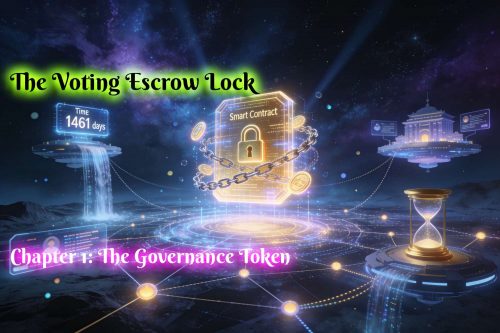
The year was 2157, and the world had long since dissolved its physical borders into a shimmering tapestry of digital communities. Among them, the Nexus Protocol stood as a beacon of what decentralized governance could achieve—a sprawling network of minds, machines, and shared purpose that spanned every time zone on the planet. It was here, in the quiet hum of her virtual workspace, that Nina found her purpose.
She sat cross-legged on a floating platform of light, her holographic interface curving around her like a protective cocoon. Data streams cascaded down the transparent screens in rivers of green and blue—transaction histories, proposal threads, community sentiment metrics, and the ever-present pulse of the protocol’s heartbeat. At seventeen, Nina had already spent three years inside this ecosystem, and she wore that tenure like a second skin. She’d joined when she was barely fourteen, drawn by the promise of a world where decisions weren’t made by faceless corporations or distant governments, but by the very people who contributed to it.
Her fingers danced across the interface, pulling up the latest governance dashboard. A single item sat at the top of the agenda, highlighted in pulsing gold:
PROPOSAL ID: QSU-2157-09
TITLE: Quantum Storage Upgrade
STATUS: AWAITING FINAL VOTE
DEADLINE: 72 HOURS
Nina’s breath caught slightly. She’d been following this proposal for months—through its early drafts, its heated community debates, its technical audits, and its countless revisions. The Quantum Storage Upgrade wasn’t just another routine improvement. It was the kind of foundational shift that would determine the Nexus Protocol’s trajectory for the next decade. If passed, it would replace the aging data storage architecture with a new quantum-compressed system that reduced costs by forty percent while tripling transaction speeds. If it failed, the protocol would stagnate, slowly losing ground to newer, more agile competitors.
And Nina believed—truly, deeply believed—that this upgrade was the right path forward.
She pulled up the proposal’s full text, her eyes scanning the dense technical language with practiced ease. She’d read it so many times that she could recite its key provisions from memory. The upgrade wasn’t just about efficiency; it was about sustainability. The current storage system consumed enormous amounts of energy, and the quantum alternative promised to reduce the protocol’s carbon footprint by nearly half. For Nina, who had grown up watching climate reports grow more desperate with each passing year, that wasn’t just a bonus—it was a moral imperative.
“Alright,” she murmured to herself, brushing a strand of dark hair from her face. “Let’s do this.”
She swiped the interface to the side, revealing a secondary panel labeled VOTING ESCROW. The name alone carried weight within the community. It was the mechanism through which tokens became more than just currency—they became a voice. Any member could participate in governance by holding tokens, but the Voting Escrow allowed those who believed in the protocol’s long-term future to amplify their influence. By locking tokens away for a predetermined period, a member could multiply their voting power, signaling to the community that their stake wasn’t just a fleeting investment but a genuine commitment.
A soft chime sounded as the interface loaded. A holographic timer appeared in the center of the screen, offering lock duration options that glowed with different intensities:
- 3 MONTHS — Faint yellow
- 1 YEAR — Soft orange
- 2 YEARS — Warm amber
- 3 YEARS — Deep gold
- 4 YEARS — Brilliant radiant gold
Nina stared at the options, her thumb hovering over the selection slider. Four years. That was a lifetime in digital terms. Protocols rose and fell, communities fractured and reformed, and the landscape of decentralized governance was as volatile as the tides. Four years ago, when she was only thirteen, the Nexus Protocol hadn’t even existed in its current form. Four years from now, who could say what would remain?
But that was exactly the point, wasn’t it?
She thought back to the day she’d first stumbled upon the Nexus Protocol. She’d been a shy, awkward teenager, searching for a place where her voice might matter. Her father, a community organizer in the physical world, had always told her that real change came from those who showed up, day after day, year after year. “You can’t build a garden if you’re only willing to water it once,” he’d say, his voice gruff but warm. “Commitment is the soil where everything grows.”
Nina smiled at the memory. Her father had passed two years ago, but his words had never left her. They were etched into her heart like the code she wrote for the protocol—lines of logic that formed the foundation of everything she believed.
She clicked the 4 YEARS option.
The interface shimmered, and a confirmation box materialized:
YOU HAVE SELECTED A LOCK DURATION OF 4 YEARS (1,461 DAYS).
YOUR TOKENS WILL BE UNAVAILABLE FOR TRADING OR TRANSFER UNTIL THE LOCK EXPIRES.
YOUR VOTING POWER WILL BE MULTIPLIED BY 4.
ARE YOU SURE YOU WISH TO PROCEED?
Nina didn’t hesitate. She pressed CONFIRM.
A cascade of golden light erupted from the interface, spiraling outward like a miniature supernova. The VeToken Contract—the smart contract that governed the Voting Escrow—processed her transaction in less than a heartbeat. She watched as her token balance dropped by a significant margin, the numbers scrolling down like a countdown to something momentous. But in the same instant, a new metric appeared on her dashboard: GOVERNANCE POWER: 16,824 VP.
She blinked. Her base token holdings, when multiplied by the four-year lock duration, had transformed her from a modest participant into a significant stakeholder. She now had four times the voting power of someone who’d locked for a single year. She could see the new countdown timer glowing at the top of her screen: 1,461 DAYS REMAINING. It was simultaneously intimidating and exhilarating.
A soft chime announced an incoming message. The sender’s avatar appeared—a small, animated starfish with a cheerful grin. It was Mira, her closest friend within the Nexus community. They’d met during a governance workshop two years ago and had been inseparable ever since.
Mira (voice message): “Nina! I just saw the lock notification on the blockchain explorer. Four years?! Are you insane? That’s like… that’s like signing a contract with the future itself!”
Nina laughed, typing back a quick response: “I know it sounds crazy. But I believe in this protocol, Mira. I believe in what we’re building.”
Mira (message): “I believe in it too, but I locked for ONE year and I’m already having second thoughts. What if something better comes along? What if the developers abandon the project? What if—”
Nina (message): “Then I’ll help make it better. That’s the point of governance, isn’t it? We don’t just watch from the sidelines. We participate. We shape. We commit.”
Mira’s response was a series of frustrated emojis, followed by a reluctant: “You’re impossible. You know that, right?”
Nina: “I prefer ‘principled.’ But I’ll take ‘impossible’ if it means making a difference.”
She closed the chat window and returned to her dashboard, her gaze lingering on the Quantum Storage Upgrade proposal. The vote was still seventy-two hours away, but she could already feel the tension building in the community forums. Some members were passionate advocates, like herself. Others were skeptical, worried about the risks of overhauling such a critical system. And then there were those who didn’t seem to care at all—who viewed governance as nothing more than a game of numbers.
She thought about those last ones with a frown. The snapshot mechanism that determined voting eligibility was simple: anyone holding tokens at the moment of the snapshot could vote. But it didn’t account for how long those tokens had been held. It didn’t distinguish between someone who’d been part of the community for years and someone who’d bought tokens five minutes before the vote. That loophole had always bothered her.
But she pushed that thought aside for now. There would be time to address systemic issues later. Right now, the only thing that mattered was the Quantum Storage Upgrade.
Far across the digital expanse, in a completely different corner of the Nexus ecosystem, Drew sat in his own workspace. But unlike Nina’s warm, glowing environment filled with community badges and collaborative tools, his was cold and clinical—a minimalist interface dominated by scrolling price charts, candlestick patterns, and real-time order books. At sixteen, Drew had already made a name for himself in the shadowy world of digital speculation. He’d hopped from protocol to protocol, riding waves of volatility, extracting profits from communities he had no intention of joining.
He leaned back in his ergonomic chair, a half-eaten protein bar in one hand, his other hand gesturing at the holographic interface. His AI trading assistant, a sleek silver orb named Vex, hovered beside him, its surface rippling with data.
Vex (synthesized voice): “Drew, I’m detecting significant upward momentum in the Nexus Protocol’s token price. Volume has increased by 340% in the past 48 hours. Market sentiment is bullish, likely due to the upcoming governance vote on the Quantum Storage Upgrade.”
Drew smirked, tossing the protein bar onto his desk. “I noticed, Vex. That’s why I’ve been watching it. When’s the snapshot?”
Vex: “The governance snapshot occurs in exactly 48 hours. Tokens held at that moment will determine voting eligibility.”
“Perfect.” Drew leaned forward, his fingers flying across the interface. He pulled up his trading portfolio, which was currently weighted heavily in more volatile assets. “Buy order. One thousand Nexus tokens. Execute immediately.”
Vex: “Confirmed. Purchase complete. Your current balance is now 1,200 Nexus tokens. Estimated cost: 12,400 credits.”
Drew didn’t blink at the number. He’d made far larger plays in the past. “Now, Vex, tell me about this proposal. Which way is the wind blowing?”
Vex: “Community sentiment is divided. Early polling indicates 52% in favor, 48% against. The vote is expected to be extremely close.”
“Close is good,” Drew mused. “Close means I can pick the winning side and cash out. I don’t care which side wins—I just care that I’m on the side that does. If it looks like the ‘Yes’ vote is gaining steam, I vote ‘Yes.’ If the ‘No’ vote surges, I vote ‘No.’ Simple.”
Vex: “And after the vote?”
Drew waved a dismissive hand. “Sell everything the moment the vote closes. The price will spike briefly on the outcome, then normalize. I’ll be out before anyone knows I was here.”
He pulled up the Nexus Protocol’s governance forum, scrolling through the discussion threads with barely concealed disinterest. He saw passionate arguments from both sides—technical analyses, emotional appeals, even a few heated personal attacks. None of it mattered to him. He didn’t care about the protocol’s long-term sustainability, its energy efficiency, or its community values. He cared about one thing and one thing only: profit.
But as he scrolled, a particular post caught his attention. It was from a user named Nina_4YearLock, and it was a lengthy, impassioned defense of the Quantum Storage Upgrade. Drew skimmed it quickly, rolling his eyes at the idealistic language.
“We have the chance to build something lasting,” the post read. “But we can only do that if we’re willing to commit. Commitment creates value. Commitment builds trust. Commitment is the foundation of everything worthwhile.”
Drew snorted. “Commitment,” he muttered sarcastically. “Commitment is a trap. It’s what suckers do when they don’t understand how the game works.”
Vex: “The game?”
“Buy low, vote smart, sell high,” Drew said with a grin. “That’s the only game that matters.”
He closed the forum and turned his attention back to the price charts. The token was climbing steadily—an ideal entry point. He watched the numbers dance, his mind already calculating the potential profit. In two days, he’d cast his vote, pocket his earnings, and move on to the next protocol. There were always more tokens to trade, more votes to exploit, more communities to drain.
But as he settled into his chair, a flicker of something—curiosity, perhaps?—made him glance back at Nina’s post. He read it again, this time more carefully. Her arguments were solid, he had to admit. She’d done her research, addressed counterarguments, and laid out a compelling vision for the protocol’s future.
“She believes,” Drew thought, shaking his head. “She actually believes.”
For a moment—just a fleeting moment—he felt a twinge of something unfamiliar. Was it envy? Admiration? He couldn’t quite identify it, and he didn’t want to.
“Vex, set a reminder for the snapshot. I don’t want to miss it.”
Vex: “Reminder set. Snapshot in 47 hours, 22 minutes.”
Drew nodded, leaning back in his chair. He closed his eyes, but the image of Nina’s post lingered in his mind. He shook it off. Sentiment was a weakness. Emotions were a liability. He’d learned that lesson the hard way, through years of trial and error.
In this game, only the numbers mattered.
Across the digital divide, Nina was still in her workspace, her face illuminated by the soft glow of the interface. She had just finished drafting a series of responses to critics of the Quantum Storage Upgrade, addressing their concerns with patience and precision. It was exhausting work, but it was also deeply fulfilling. She felt like she was building something, not just for herself, but for everyone who would come after her.
She glanced at the lock timer once more: 1,460 DAYS, 23 HOURS, 57 MINUTES. The number was staggering, but it didn’t intimidate her. Instead, it filled her with a quiet sense of purpose. She had made her choice. She had planted her flag in the soil of the future.
As she prepared to log off for the night, her interface flickered with a notification: BLOCKCHAIN EXPLORER UPDATE. She opened it out of habit, scanning the recent transactions. Her eyes narrowed as she noticed a cluster of addresses that had acquired significant token holdings in the past few hours. All of them had zero lock duration. All of them appeared to be connected to a single wallet.
Nina’s instincts prickled. Something didn’t feel right.
She bookmarked the addresses for further investigation, making a mental note to check them again tomorrow. But for now, exhaustion was finally catching up to her. She closed her interface, the golden light fading to darkness.
As she drifted toward sleep, her mind wandered to the path ahead. The vote was just three days away. The outcome was uncertain. And somewhere out there, people were making decisions that could shape—or break—the community she loved.
Two paths. One future.
Only one of them cared which path the community would take.
Table of contents:
Introduction
Chapter 1: The Governance Token
Chapter 2: A Vote for Influence <<<<<< NEXT
Chapter 3: The Locking Period
Chapter 4: The Voting Escrow
Chapter 5: The Long-Term Commitment
Chapter 6: The Short-Term Speculator
Chapter 7: The VeToken Upgrade
Chapter 8: The Lock Extension
Chapter 9: The Governance Alignment
Chapter 10: Commitment Creates Value
