Jesse’s bedroom smelled like old pizza and the particular kind of desperation that only comes from watching a countdown timer for three straight hours.
He sat cross-legged on his gaming chair, knees pulled up to his chest, eyes locked on the screen. The countdown floated in the center of his display: 00:03:42. Three minutes and forty-two seconds until the Emberheart sale went live.
His phone buzzed. He ignored it.
His mom called from downstairs, something about dinner. He yelled back, “In a minute,” without actually hearing what she’d said.
Nothing else mattered right now.
On his wall hung a small collection of digital artifact display frames—empty glass-like rectangles that showed rotating images of the items he’d collected over the past two years. A dragon-scale cloak from the Winter Forge event. A compass that pointed to hidden treasure maps. A quiver of arrows that never ran out.
But the center frame, the biggest one, had been empty for eight months.
That frame was waiting for Emberheart.
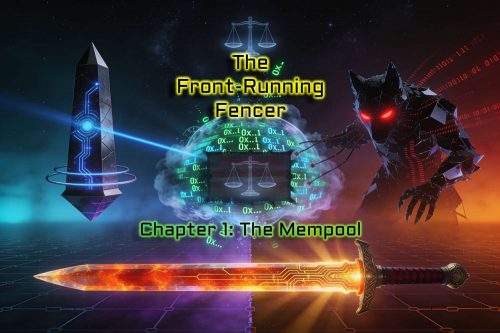
Jesse had first seen the sword six months ago, during a sneak preview of the Legacy of Ember collection. It was beautiful: a long blade that seemed to glow from within, orange and red light pulsing like molten metal, a hilt wrapped in dark leather with a single ruby at the pommel. The creator had designed only one hundred copies. Each would sell for exactly fifty credits.
Fifty credits didn’t sound like much. But Jesse had been saving since the announcement. He worked part-time at GameCrater (a local store that sold old board games and newer digital collectibles), earning twelve credits an hour. After taxes, after putting some aside for actual food, he’d managed to save sixty-three credits.
Enough for Emberheart. Enough for the sword that would finally fill that empty frame.
The problem was that everyone else wanted it too.
00:02:15
Jesse cracked his knuckles. He’d practiced this submission at least forty times over the past week. Open wallet app. Select payment method. Input recipient address (he’d memorized it). Confirm amount. Submit.
Total time from sale start to submission: approximately 1.8 seconds.
He’d timed it.
His friend Marisol had told him he was being crazy. “It’s just a sword, Jess. A digital sword. You can’t even hold it.”
“You don’t understand,” he’d said. “It’s not about holding it. It’s about having it.”
Marisol had rolled her eyes. But Marisol didn’t collect. Marisol didn’t know what it felt like to open your display frames in the morning and see all the things you’d earned, all the proof that you’d been there, that you’d won.
00:01:00
Jesse’s hands hovered over the keyboard. His wallet app was open on the left side of his screen, the transaction pre-filled and ready. All he needed was the signal.
The creator’s website had a live feed. A chat room exploded with messages from other buyers.
Good luck everyone
I’ve been waiting for this for months
Please let me get just one
My body is ready
Jesse didn’t type. He didn’t have anything to say. He just stared at the countdown.
00:00:10
Ten seconds.
He put his fingers on the keys.
00:00:05
Five.
00:00:04
Four.
00:00:03
Three.
00:00:02
Two.
00:00:01
One.
00:00:00
The sale button turned from gray to blazing orange.
Jesse clicked.
His wallet app flashed: TRANSACTION SUBMITTED.
He let out a breath he didn’t know he’d been holding.
The pending animation spun on his screen. A little wheel, turning and turning, like a loading icon that had forgotten how to finish.
“Come on,” Jesse whispered. “Come on, come on, come on.”
He knew how this worked. He’d bought dozens of artifacts before. You submit a transaction, it goes into the system, and anywhere from thirty seconds to two minutes later, it confirms. The item appears in your inventory. The money leaves your account. Everyone goes home happy.
Except sometimes it took longer. Sometimes the network got busy. Sometimes you had to wait.
Jesse glanced at the chat room.
submitted!
same
anyone got confirmation yet?
not yet
ugh hurry up
He checked his wallet app again. Still pending. Still spinning.
Thirty seconds passed. Then a minute.
A weird feeling started to creep into Jesse’s chest. Not quite panic. More like the sensation of missing a step on a staircase—that lurch where your body expects solid ground and finds nothing.
He refreshed the sale page.
Emberheart – Second Edition
Copies remaining: 100
Still one hundred. That meant no one had confirmed yet. The sale had just opened. The system was processing.
He told himself to relax.
Two minutes passed.
Three.
Then the chat room exploded.
GOT IT
ME TOO
Finally!
Jesse refreshed the sale page.
Copies remaining: 84
He refreshed again.
Copies remaining: 52
Again.
Copies remaining: 31
Again.
Copies remaining: 9
Again.
Copies remaining: 0
His hands were shaking now. He looked at his wallet app. Still pending. Still spinning. That little wheel, mocking him.
“No,” he said. “No, no, no.”
He refreshed his inventory page.
Empty. No Emberheart.
He refreshed his transaction history.
Transaction ID: 0x8f3a…7b2c
Status: Pending
Amount: 50 credits
Recipient: Emberheart Sale Contract
Pending. Still pending.
But the sale was over. All one hundred swords were gone.
How could the sale be over if his transaction was still pending? He’d submitted within the first second. He knew he had. He’d practiced. He’d been ready.
Jesse slammed his palm on the desk. The vibration knocked over an empty soda can, which rolled across the keyboard and clattered to the floor.
He didn’t pick it up.
Twenty minutes later, the transaction finally confirmed.
Jesse watched it happen with the hollow feeling of someone watching a replay of a game they’d already lost.
TRANSACTION CONFIRMED
Purchase of Emberheart: 0 units acquired
Zero.
He clicked through to the transaction details. The block explorer showed him the full record—a long string of numbers and letters, addresses he didn’t recognize, timestamps he couldn’t quite interpret.
But one thing caught his eye.
Block #4,821,033
Transactions in block: 187
He scrolled through the list of transactions. Most of them were random—people moving money between accounts, paying for coffee, buying other artifacts. But near the top of the list, he saw a cluster of transactions that all pointed to the same address.
0x3f2a…9d11: Purchased Emberheart x1 (50 credits)
0x3f2a…9d11: Purchased Emberheart x1 (50 credits)
0x3f2a…9d11: Purchased Emberheart x1 (50 credits)
The same address. Fifteen times.
Fifteen swords. All bought by the same person. In the same block.
Jesse scrolled further down the block. Near the bottom, he found his own transaction.
0x7c1e…2b8f (Jesse’s wallet): Purchased Emberheart x0 (failed)
Failed. Not even a successful purchase that got beaten. Just… failed.
He stared at the screen for a long time. The same address. Fifteen swords. How was that possible? The sale was supposed to be one per person. The contract was supposed to enforce it.
But the contract only checked at the moment of purchase. And if fifteen transactions from the same address were all included in the same block, the contract would see each one as a separate purchase, not realizing they were all from the same person until after the block was finalized.
By then, it was too late.
Someone had found a way to buy fifteen copies of a sword that was supposed to be limited to one per person.
And Jesse had gotten nothing.
He didn’t sleep well that night.
He lay in bed, staring at the ceiling, running through the sequence again and again. He’d clicked first. He was sure of it. The chat logs showed other people reporting confirmations minutes after the sale started. But somehow, his transaction had ended up at the bottom of the block, while other transactions—including fifteen from the same greedy address—had ended up at the top.
It didn’t make sense.
Unless the system wasn’t first-come, first-served.
Unless there was something else going on. Something he didn’t understand.
Jesse grabbed his phone from the nightstand. It was 2:17 AM. He didn’t care.
He typed into the search bar: why did my transaction take so long
The results were confusing. Pages and pages of forum posts, technical documentation, arguments between strangers about something called “gas fees” and “mempool” and “validator priority.” He clicked through a few, but the language was dense, full of jargon that made his eyes glaze over.
Then he found a post that caught his attention.
Title: “I keep getting front-run. How do I stop it?”
Post: “Every time I try to buy a rare artifact, someone else buys it first even though I know I submitted first. Someone told me this is called front-running. How does it work and how do I beat it?”
Top reply: “You can’t beat front-running if you’re a normal user. The bots are faster and richer than you. Your only real option is to stop buying on networks that allow it. Or find a validator pool that doesn’t participate in MEV extraction. Good luck with that.”
Jesse read the reply three times.
Bots. Validator pools. MEV extraction.
He didn’t know what half those words meant. But he understood the bottom line: someone was cheating, and there was nothing he could do about it.
He threw his phone across the room. It hit the wall and landed facedown on the carpet.
He didn’t pick it up.
The next morning, Jesse called in sick to GameCrater.
He wasn’t sick. He just couldn’t face the thought of standing behind a counter, selling digital artifacts to happy customers, while his own display frame stayed empty.
Instead, he sat at his desk and stared at the block explorer again. The same block. The same fifteen transactions. The same address that had taken everything.
He started digging.
The address that bought fifteen swords—0x3f2a…9d11—wasn’t a normal user account. It had no profile picture, no display name, no history of human activity. Instead, it showed a pattern that Jesse began to recognize after scrolling through dozens of blocks.
The address appeared in block after block after block. Always buying. Always at the front of the line. Always taking advantage of sales, auctions, and limited drops.
It wasn’t a person.
It was a machine.
Jesse searched for the address in forums and found dozens of threads from other angry buyers.
“This bot got me too.”
“Same address! It front-ran my purchase of the Frost Shield.”
“I’ve seen this bot on three different marketplaces. It never sleeps.”
Someone had given it a name: The Seeker.
Not because it searched for artifacts. Because it saw what other people were trying to buy, and then it sought the same thing with a better offer. Faster. Higher. Always ahead.
Jesse leaned back in his chair. The name stuck in his head. The Seeker.
He hated it already.
Three days passed. Jesse didn’t try to buy anything else. He just watched.
He watched the mempool—a term he’d finally learned from a tutorial video. The mempool was the waiting room of unconfirmed transactions. Every time someone submitted a purchase, a trade, or a payment, it sat in the mempool until a validator picked it up and added it to a block.
And anyone could watch the mempool in real time.
Jesse found a public mempool viewer—a simple website that showed a scrolling list of pending transactions. He watched it for hours. Transactions appeared, disappeared, got replaced by other transactions with higher fees.
He saw the pattern.
A normal user would submit a transaction with a reasonable gas fee. Thirty seconds later, The Seeker would submit the same transaction—same recipient, same amount—but with a slightly higher fee. Then another user. Then another bot. A cascade of bids, each one trying to jump ahead.
And the validators? They just picked the highest fees. Why wouldn’t they? They got paid more that way.
Jesse thought about Nia.
He’d met her once, six months ago, at a community meetup for people who collected digital artifacts. She was younger than him—sixteen, maybe—but she talked about blockchain technology like she’d invented it herself. She wore oversized glasses and a hoodie from some validator pool he’d never heard of.
He remembered her saying, “Most people think validators are just computers. But someone has to run them. Someone has to decide which transactions go in the block.”
At the time, he hadn’t thought much about it. Now, he wondered.
He found her contact info in an old group chat.
Jesse: Hey. This is random. You’re a validator operator, right?
The reply came faster than he expected.
Nia: Depends. Who’s asking?
Jesse: Jesse. We met at the Collector Con thing. You were explaining MEV to someone and I pretended to understand.
Nia: Oh yeah. The guy who kept nodding but clearly had no idea what I was saying.
Jesse: That’s me.
Nia: What do you need?
Jesse hesitated. Then he typed the whole story. The Emberheart sale. The fifteen swords. The address that bought them all. The Seeker.
Nia: Ah. You got front-run.
Jesse: That’s what I figured. But I don’t understand how it works or why validators allow it.
Nia: Because it’s profitable. I can explain more. But not over text.
Jesse: Can we meet?
There was a long pause. Jesse watched the typing indicator appear and disappear, appear and disappear.
Nia: Library. Tomorrow. 3 PM. Study room C. I’ll bring my laptop.
Jesse: Thank you.
Nia: Don’t thank me yet. You might not like what I have to tell you.
Jesse put down his phone and looked at the empty display frame on his wall.
Somewhere out there, The Seeker was still scanning the mempool, still jumping ahead, still taking what should have been his.
Tomorrow, he’d start to understand how.
And maybe—just maybe—he’d start to figure out how to fight back.
Table of contents:
Introduction
Chapter 1: The Mempool
Chapter 2: A Transaction in the Dark <<<<<< NEXT
Chapter 3: The Gas Auction
Chapter 4: The Sandwich Attack
Chapter 5: The Priority Fee War
Chapter 6: A Fair Ordering Protocol
Chapter 7: The Commit-Reveal Scheme
Chapter 8: The Encrypted Mempool
Chapter 9: The Time-Weighted Consensus
Chapter 10: A Just Sequence
