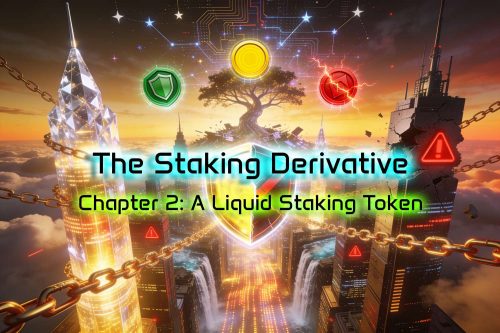
The Agora materialized around Dara in a cascade of shimmering light.
She had visited virtual spaces before—the Nexus was built on them, layers upon layers of digital reality stacked atop the physical city like invisible architecture. But the Agora was different. It was designed to mimic a grand public square from some ancient civilization, all marble columns and open-air pavilions, with holographic fountains that sprayed digital water and never wet the ground.
Dara’s avatar stood at the entrance, a clean representation of herself with her usual worn jacket and practical boots. She’d chosen to appear as she was—no point in pretending to be something she wasn’t, not when she was about to ask for help.
Her wrist-comm pulsed with a navigation guide, directing her toward the SolVault virtual office. She followed the path through crowds of avatars—some elaborate and fantastical, others as plain as her own—until she reached a gleaming structure that looked more like a bank than anything else. Columns of pure light supported a facade that shimmered with constantly changing numbers and graphs.
The entrance slid open as she approached, and a synthesized voice greeted her: “Welcome to SolVault. Please enter.”
Dara stepped inside.
The interior was all polished obsidian and floating holographic displays, with comfortable seating arranged in small clusters. A few other avatars occupied the space, their expressions ranging from curious to anxious. They were clearly here for the same reason she was—locked funds, desperate need, grasping at solutions.
A young man emerged from a back office, his avatar crisp and confident. He was tall, with sharp features and dark hair swept back from his forehead in a style that was deliberately casual but clearly carefully maintained. He wore a sleek dark jacket with silver trim, and his wrist-comm glowed with an expensive-looking interface that Dara recognized as a top-tier model.
He smiled as he approached her, a smile that was warm but held a hint of calculation beneath its surface.
“Dara, right?” he said, extending his hand. “I’m Sol. Thanks for coming.”
She shook his hand, surprised by how real the contact felt in the virtual space. “You sent me the message. About the Liquid Staking Derivatives.”
“Indeed I did.” Sol gestured to a seating area where holographic cushions conformed to their avatars as they sat. “And I’m guessing you’re here because you have tokens locked away that you need to access. Am I right?”
Dara nodded slowly. “My mother is sick. She needs treatment that I can’t afford right now. I have staked tokens, but they’re locked for two more years.”
Sol’s expression shifted, the confident smile softening into something that might have been sympathy. Or might have been a good performance. Dara couldn’t quite tell.
“I’m sorry to hear about your mother,” he said. “That’s exactly the kind of situation I designed SolVault to address. The staking ecosystem is powerful, but it has a fundamental flaw—it locks up value when people need it most. My protocol changes that.”
“How?” Dara leaned forward. “How can you give me access to something that’s locked?”
Sol’s eyes lit up with enthusiasm. It was clear he loved talking about his creation. “Let me explain it simply. You have staked tokens, right? They’re locked in a smart contract, securing a network, earning rewards. That’s a valuable asset. It’s just… not liquid.”
“I know that.” Dara’s voice was sharper than she intended. “That’s why I’m here.”
“Right, right.” Sol held up his hands in a placating gesture. “Sorry, I’m used to explaining this to people who don’t know anything. You clearly know the basics. So here’s the key: when you deposit your staked tokens into my protocol, I issue you a new token—a Liquid Staking Derivative. Or LSD, for short.”
Dara frowned. “A new token? But I already have tokens.”
“Exactly. And your new tokens are liquid.” Sol’s hands moved animatedly as he spoke, drawing shapes in the air that formed into holographic diagrams. “See, your original tokens are locked, but your new tokens aren’t. They can be traded, sold, borrowed against—whatever you need to do. They represent your claim on the underlying staked assets, but with the key difference that they’re completely liquid.”
Dara studied the diagrams, trying to understand. “So… I deposit my tokens into your contract, and you give me a receipt. And the receipt is tradable?”
“More than a receipt!” Sol laughed, but it was a friendly laugh, not mocking. “A derivative token is a tradable financial instrument in its own right. It has value because it represents value. It’s like having a share in a company—the share is not the company, but it represents ownership and can be bought and sold.”
“But the underlying tokens are still locked,” Dara pressed. “What happens when someone wants to redeem their derivative tokens? How do they get the original staked assets back?”
Sol nodded approvingly. “Excellent question. See, you’re thinking like a smart investor already.” He tapped his wrist-comm, and the holographic diagrams shifted. “The redemption mechanism is built into the contract. When you want to redeem, you return the derivative tokens to the protocol, and we initiate the unstaking process. It takes time—that’s the nature of staking—but the user gets their underlying tokens back eventually.”
“So there’s a delay.”
“There’s always a delay with staking. That’s the trade-off.” Sol shrugged. “But here’s the beauty: you don’t have to wait. You can sell your derivative tokens instantly to someone who’s willing to wait for the redemption. You get liquidity right now, and they get a long-term asset at a slight discount. It’s a win-win.”
Dara studied him for a moment. “What’s the catch?”
Sol blinked. “Excuse me?”
“There’s always a catch.” Dara crossed her arms. “I didn’t get where I am by believing in free lunches. So tell me. What’s the risk?”
For the first time, Sol’s composure faltered. Just slightly—a flicker of something in his eyes that might have been annoyance, or might have been respect. “There’s always risk in any financial instrument,” he admitted. “The derivative token trades at a slight discount to the underlying asset because of the redemption delay. That’s natural market pricing. But the discount is small, typically just a few percent. And the liquidity you gain outweighs the cost.”
“That’s not what I’m asking.” Dara leaned closer. “What happens if something goes wrong? What happens if the staking pool gets slashed?”
Sol waved a dismissive hand. “Slashing events are extremely rare. Validators have strong incentives to behave properly. The risk is minimal.”
“Minimal isn’t zero.”
“No, but nothing in finance is zero risk.” Sol’s voice took on a slightly impatient edge. “Look, I’m not trying to hide anything from you. The SolVault protocol is transparent, audited, and secure. I’ve designed it to protect users while providing them with the liquidity they need. That’s the whole point.”
Dara fell silent, turning the information over in her mind. The risk was there—she could sense it, even if Sol was downplaying it. But what choice did she have? Her mother’s treatment cost a fortune, the tokens were locked for two years, and this was the only option anyone had offered her that seemed even remotely viable.
“What’s the process?” she asked finally. “How do we do this?”
Sol’s smile returned, broader than before. “That’s what I like to hear. It’s simple, really. You transfer your staked tokens to the SolVault smart contract. I’ll walk you through it. Once the transfer is confirmed, the protocol mints an equivalent amount of derivative tokens in your wallet. From there, you can trade them on any of the major exchanges or use them as collateral for a loan. The whole process takes about ten minutes.”
Ten minutes. Dara thought of her mother, lying in bed in their cramped apartment, counting the days she had left. Six months. Maybe less.
“Show me,” she said.
Sol guided her through the transfer with patient efficiency. The smart contract was displayed on her wrist-comm, lines of code scrolling past in a blur that she couldn’t possibly parse. She’d always thought she was reasonably tech-savvy, but this was beyond her. The contract was vast, complex, a veritable machine of logic and mathematics.
“Is it safe?” she asked, hovering over the final confirmation.
“Completely audited by three independent firms,” Sol assured her. “I don’t want to sound arrogant, but the SolVault protocol is the most carefully designed derivative contract in the Nexus. You’re in good hands.”
Dara took a breath. Then she pressed confirm.
The transfer was instantaneous. One moment, her staked tokens were locked in the network contract, their shield icon glowing with its usual quiet assurance. The next, they were gone, transferred to a SolVault wallet that glowed with a new symbol—a stylized “S” intertwined with a chain.
And then, as promised, a new token appeared in her wallet.
The derivative token was sleek and polished, its icon a bright silver coin with the same “S” and chain logo. A number appeared beside it: 1,247.83. The same amount as her original stake.
Dara stared at it. “So… I own this now?”
“You own it,” Sol confirmed. “It’s yours to do with as you please. Sell it, borrow against it, trade it—whatever you need. Congratulations. You’ve just unlocked your locked fortune.”
It felt too easy. Too simple. Dara had spent days agonizing over her locked tokens, and here they were, freed in ten minutes with the click of a button.
“The discount,” she said, remembering. “You said the derivative token trades at a slight discount to the underlying asset. What’s the current price?”
Sol’s expression shifted slightly—a flash of something that might have been calculation. “The market hasn’t fully priced in the new issuance yet,” he said carefully. “The discount is… variable. It typically settles around three to five percent.”
Three to five percent. On 1,247 tokens, that was a loss of somewhere between thirty and sixty tokens. More than her entire year’s rewards from staking. Dara felt a pang of regret, but she pushed it aside. Her mother’s treatment was more important than a few percentage points.
“I need to sell some of these,” she said. “I need the credits for my mother’s treatment.”
Sol nodded. “The Volta Exchange is the primary market for derivative tokens. I can guide you through the process if you want.”
Dara felt a surge of exhaustion. “Right now?”
“I… actually, I have another meeting scheduled in a few minutes.” Sol glanced at his wrist-comm, and Dara noticed for the first time that his fingers were tapping nervously against his thigh. “But I can recommend some resources—guides, tutorials, that sort of thing. It’s really straightforward. You’ll be fine.”
Something about his haste made Dara uneasy. “You’re leaving? Just like that?”
“I’m not leaving you in the lurch,” Sol said quickly. “I’m always available if you have questions. But I have other responsibilities. Creating a protocol like this takes a lot of work, you know? People rely on me.”
Dara wanted to argue, but she was tired. Tired of fighting, tired of worrying, tired of being afraid. She just wanted to get the credits and save her mother.
“Fine,” she said. “Send me the guides.”
Sol’s smile returned, though it seemed slightly forced now. “You won’t regret this, Dara. The SolVault protocol is going to change everything. You’re part of the future now.”
He extended his hand, and Dara shook it. His grip was firm, confident, but his eyes were already drifting toward the doorway where another avatar was waiting.
“Good luck,” he said, and then he was gone, disappearing through the door with a flash of light.
Dara stood alone in the virtual office, her wrist-comm glowing with its new balance. She had the tokens. She had the liquidity. She had what she needed to save her mother.
So why did she feel so unsettled?
The Volta Exchange materialized around her in a whirl of color and sound.
Unlike the Agora’s classical elegance, the exchange was pure digital chaos. Data streams raced across every surface, cascading in waterfalls of numbers and graphs. Avatars of traders clustered around virtual trading terminals, their hands flying across holographic keyboards as they bought and sold. The air hummed with the constant chatter of deals being struck, positions being opened and closed.
Dara felt immediately overwhelmed. The guides Sol had sent were dense with terminology she didn’t fully understand—spot prices, liquidity pools, order books—and the interface of the exchange was designed for professionals, not desperate teenagers.
She found the derivative token in the listing, its silver icon gleaming amid a sea of other tokens. The current price was displayed beside it: 0.965.
A 3.5% discount. She’d expected that. What she hadn’t expected was how fast the number was moving. It flickered and danced, sometimes dropping as low as 0.958, sometimes climbing to 0.972. Volatility churned beneath the surface like a storm.
Dara took a breath. She didn’t need to understand everything. She just needed to sell enough tokens to cover the treatment cost. Once her mother was safe, she could learn the rest.
She navigated to the sell order interface, her fingers clumsy on the holographic controls. She entered the amount she needed—the full cost of the treatment—and watched as the exchange calculated the equivalent in derivative tokens.
It was more than she’d hoped to sell. Nearly 40% of her holdings. But what choice did she have?
She confirmed the order.
The tokens vanished from her wallet, replaced by a credit balance in the exchange’s stable asset. Dara stared at the number, feeling a strange mixture of relief and loss. The credits were there. She could pay for her mother’s treatment. She could save her.
But the derivative tokens she still held—the 60% remaining—they seemed smaller somehow. Less certain. The price continued to flicker, and she found herself watching it obsessively, as if her attention alone could keep it stable.
She pulled up the doctor’s contact and transferred the treatment cost in full. A confirmation message appeared within seconds: Payment received. Treatment scheduled to begin tomorrow. Thank you.
Dara closed her eyes and let out a long, slow breath.
She’d done it. She’d found a way. Her mother would get the treatment she needed, and everything would be okay.
But as she logged out of the exchange and left the virtual space behind, she couldn’t shake the feeling that she’d just made a deal with something she didn’t fully understand. Sol’s enthusiasm, the discount, the volatility—it all swirled together in a confusing mess of doubt and hope.
She opened her eyes in the physical world, the familiar walls of her apartment surrounding her. From her mother’s room, she heard the soft sounds of sleep—shallow breathing, occasionally interrupted by a cough that made Dara’s heart clench.
She walked to the door and peered inside. Elara lay on the bed, her face peaceful for once, the lines of pain and exhaustion smoothed away by sleep. Her fingers were curled loosely around the blanket, and Dara remembered how those fingers had held her when she was small, how they’d guided her through the complexities of the Nexus with patient love.
“I’m going to save you, Mom,” Dara whispered. “I don’t know how, but I will.”
She closed the door and retreated to her own small room, where she lay on the thin mattress and stared at the ceiling. Her wrist-comm glowed on the nightstand, the derivative tokens still showing their full value—for now.
Dara thought about Sol, about the contract she’d signed, about the words she’d barely understood. She thought about the discount, and the volatility, and the way Sol’s eyes had flickered when she pressed him on the risks.
She thought about what she’d do if everything went wrong.
But she was too tired to think for long. Sleep crept over her like a wave, pulling her down into darkness.
And in her dreams, the derivative tokens danced and flickered, their silver light fading to gray, then to black.
Table of contents:
Introduction
Chapter 1: The Locked Fortune
Chapter 2: A Liquid Staking Token
Chapter 3: The Derivative Discount <<<<<< NEXT
Chapter 4: The Yield Aggregator
Chapter 5: The Depeg Panic
Chapter 6: The Slashing Event
Chapter 7: The Derivative Collapse
Chapter 8: The Underlying Emergency
Chapter 9: The Re-staking Protocol
Chapter 10: Unlocking Value, Unlocking Risk
